
Which tracing worksheets should you start with?
Follow the order children's hands develop in. Each step uses the strokes from the step before, so skipping ahead usually means going back later.
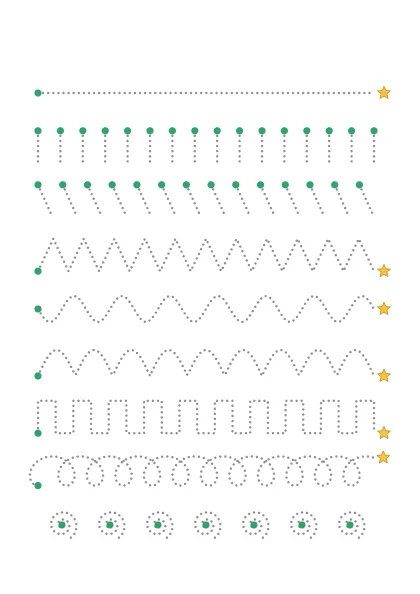
- Lines: across, down, slanted, then curves. Toddlers can start here with a crayon around age 2.
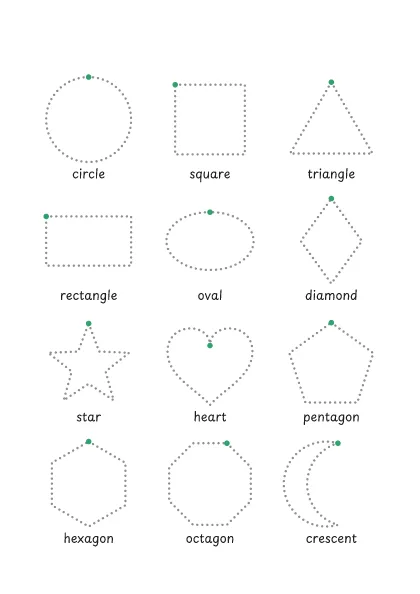
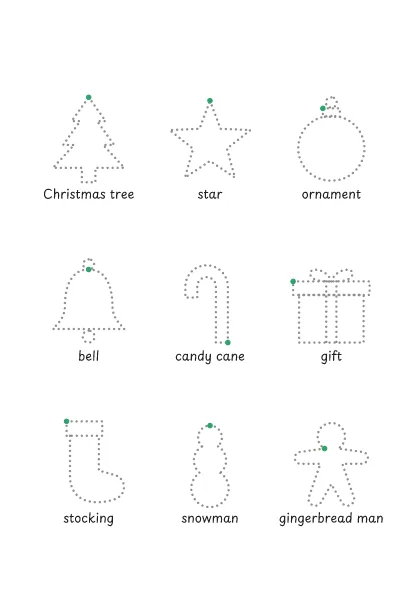
- Shapes: circle first, then square, triangle and diamond. Shapes combine lines into closed paths.
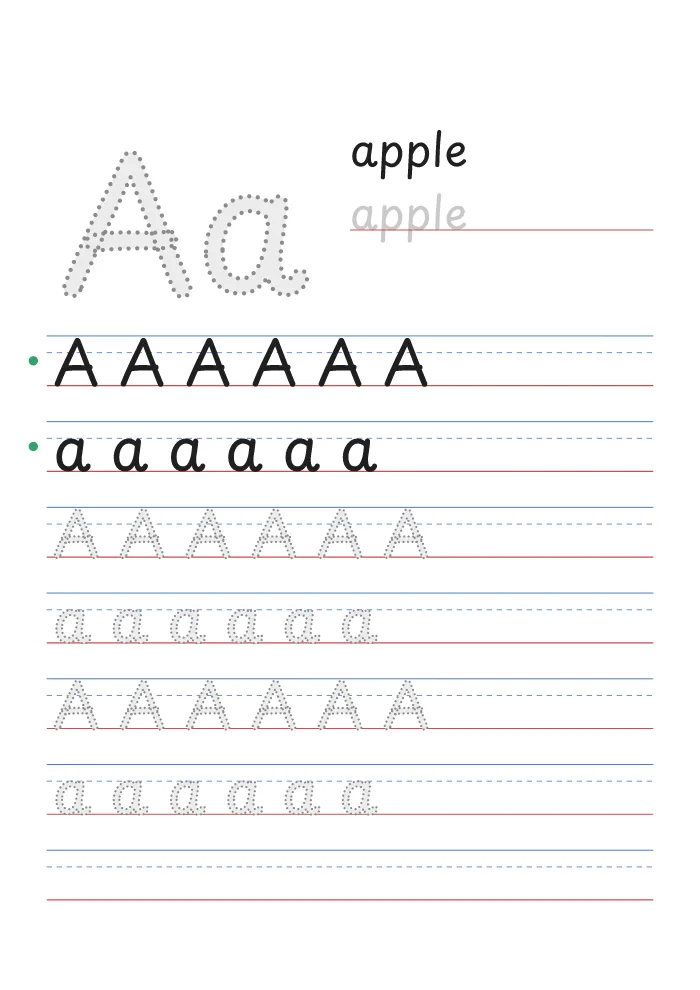
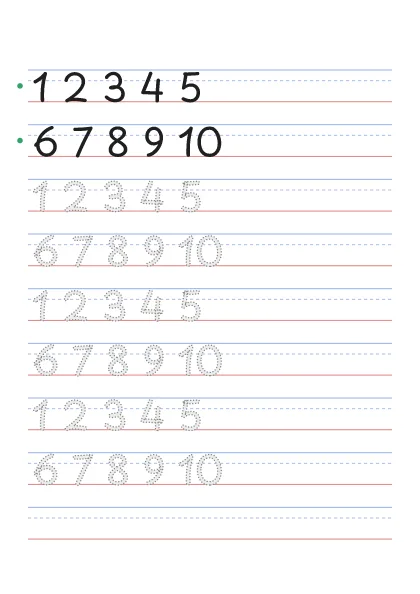
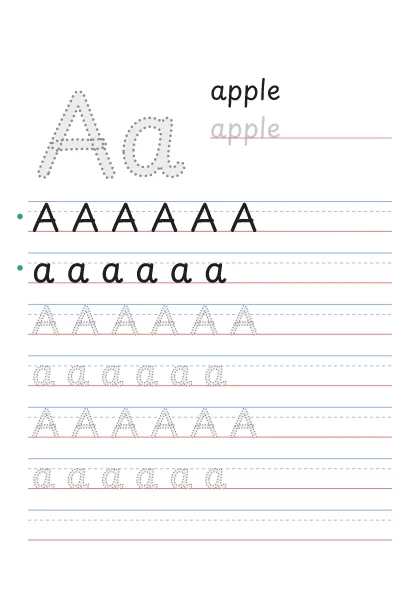
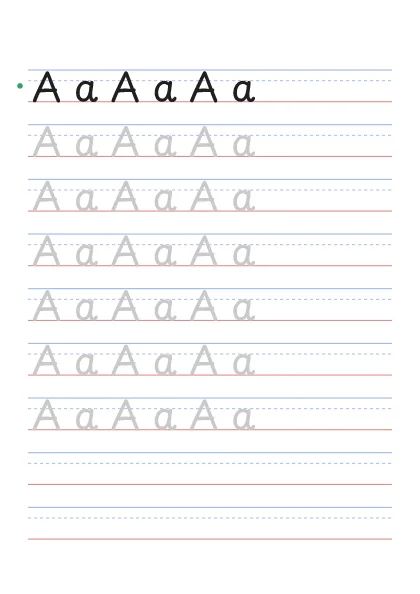
- Numbers and letters: once circles and slanted lines are steady, usually between 3 and 4. Start with the letters in the child's name.
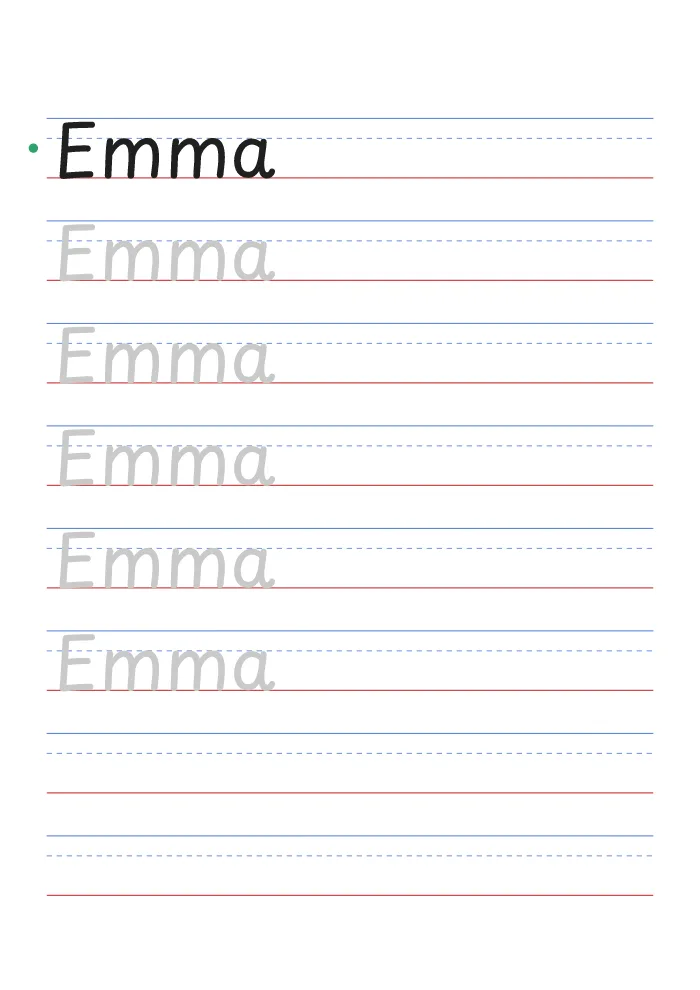
- Name: the most motivating sheet of all, and a good test of everything before it.
- Writing alone: every sheet ends with an empty row or box. When that part looks like the tracing, move to the next sheet.
Tips for tracing practice that sticks
- Short and often: five to ten minutes a day beats an hour once a week.
- Finger, crayon, pencil: trace each new sheet with a finger first, then a crayon, then a pencil.
- Start at the green dot: every path on these sheets shows where to begin, so good habits form from the first day.
- Top to bottom, left to right: the two directions used in writing. Say them out loud while tracing.
- Grip check: a short, fat crayon or a broken one nudges small fingers into a tripod grip.
- Laminate favorites: a sheet protector and a dry-erase marker make one page reusable for weeks.
Dotted, gray or outline?
On the letter and number sheets you can choose how the shapes look. Gray letters are solid and easiest to stay inside, good for age 3. Dotted is the classic school look and shows the exact path. Outline shows only the edge, so children can trace inside or color in. Shapes and lines are always dotted, with a green start dot, and lines end at a yellow star.
Print on A4 or US Letter
Choose your paper in the maker before downloading and the PDF is made at that exact size; US Letter is picked automatically in the US, Canada and Mexico. Print at 100% ("actual size"). Plain copy paper is fine for crayons and pencils; use cardstock for pages you plan to laminate.