

How many types of graffiti are there?
There is no official number of graffiti styles, but most writers sort graffiti two ways. By size and finish: tag, throw-up, piece and burner. By lettering style: bubble, straight, blockbuster, 3D, Old English, semi-wildstyle and wildstyle. Stencils, stickers, paste-ups and characters sit alongside them as related types of graffiti art.
So a single wall can be several types at once: a burner (finish) in semi-wildstyle (lettering) with a character on the side. Thinking in those two layers makes the names much less confusing.
Each graffiti style in detail
Tag
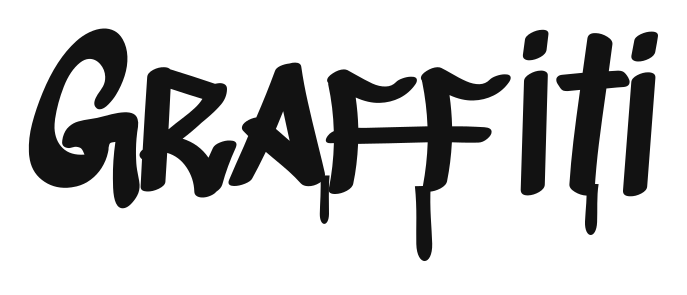
A tag is a writer's signature, done in one color with a marker or a can in a few seconds. It looks simple, but a good tag takes years: the letters have to flow, connect and look confident at speed. Every other style grows out of it. The guide to making a graffiti tag walks through it step by step.
Handstyle
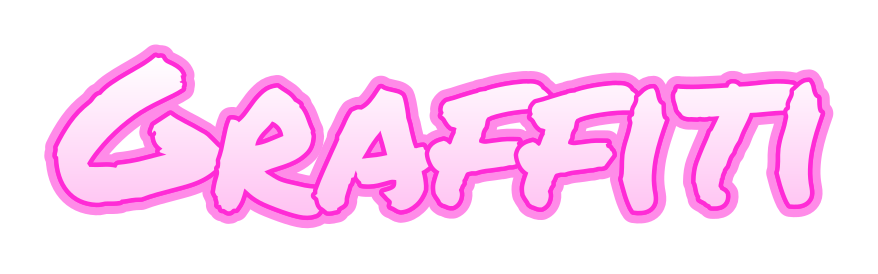
Handstyle is the way a writer shapes letters when tagging: the lean, the connections, the flicks at the end of a stroke. Two writers can tag the same name and look nothing alike. Some cities have handstyles of their own, such as the tall, looping "wickets" associated with Philadelphia.
Throw-up
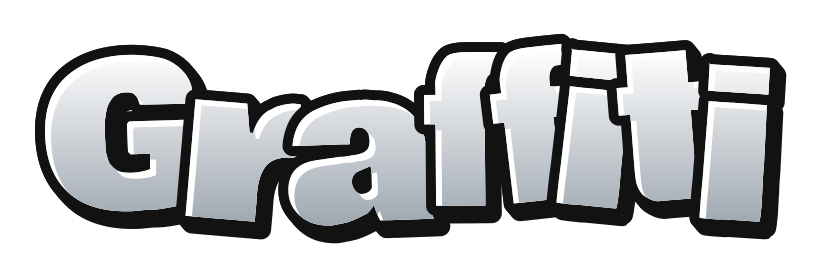
A throw-up is a fast piece in two colors, usually rounded letters with one fill and one outline. Writers use throw-ups to get their name up quickly. A chrome or silver fill with a black outline, sometimes called silver style, is the classic version because it covers well and reads from far away.
Bubble letters
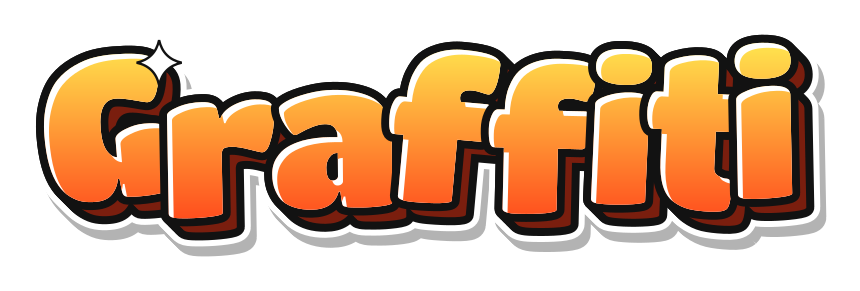
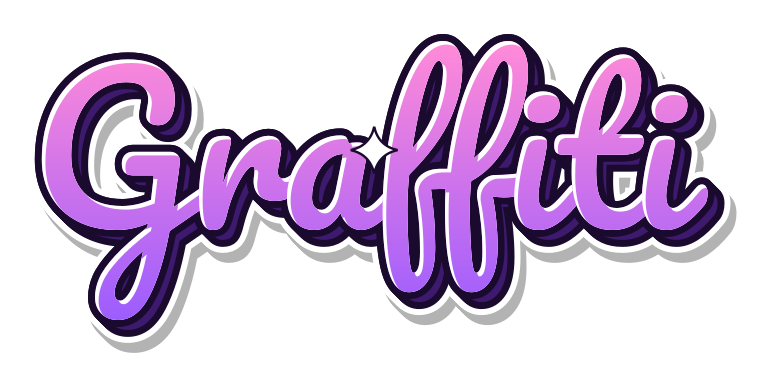
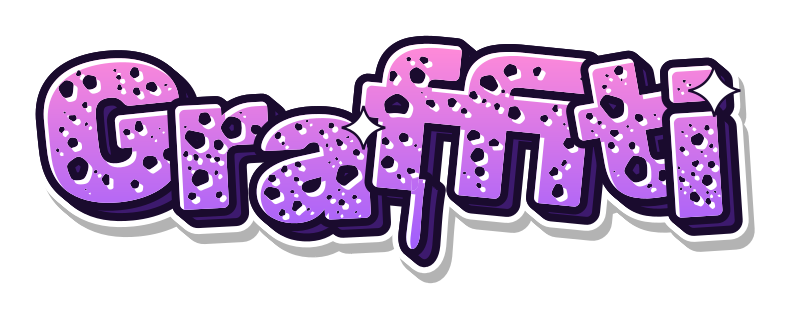
Bubble letters are soft, inflated shapes with no sharp corners. They are the classic first style because they forgive wobbly lines and teach outline, fill, 3D and highlights. A joined-up script version, with one outline wrapped around the whole word, is shown on cursive bubble letters and is the Cursive style in the generator.
Straight letters and blockbusters
Straight letters, sometimes called simple style, are clean, readable block letters. Blockbusters push that idea to the extreme: huge, square letters built to cover a whole wall or train car and be read from far away. Both reward neat proportions over flair, and big blockbusters are often filled with rollers rather than cans.
3D
3D is not a style on its own but an effect added to almost any style: a block on one side of every letter that makes it look solid. Getting the depth and angle consistent is the whole trick. Some European writers, such as Daim from Hamburg, took 3D so far that the letters look sculpted rather than painted.
Stencil
Stencil letters are cut out of card or film and sprayed through, so every copy looks the same. Bridges hold the inside of letters like O and A in place. Stencils are as common for images as for letters; Banksy is the best-known stencil artist.
Old English
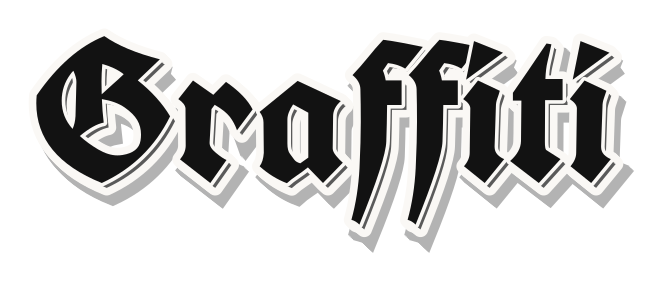
Old English is gothic blackletter with thick strokes and thin hairlines. It is central to chicano lettering and tattoo culture in Los Angeles, and rewards patience more than speed.
Semi-wildstyle
Semi-wildstyle sits between straight letters and wildstyle. The letters stay readable, but they lean, overlap and pick up a few arrows and extensions. Most pieces on legal walls are some form of semi-wildstyle, and it is the natural next step once your straight letters feel solid.
Wildstyle
Wildstyle breaks letters apart and locks them back together with arrows, extensions and connections. It is hard to read on purpose and the hardest style to master.
Calligraffiti
Calligraffiti blends calligraphy and graffiti: broad-edge strokes, flowing script or Arabic and Latin letterforms painted at wall scale. The term was popularized by Dutch artist Niels Shoe Meulman. If you like the thick-and-thin rhythm of Old English, it is worth exploring.
Characters
Characters are cartoon figures painted next to the letters: a b-boy, an animal, a face. They give a piece a mood and a point of focus. Many writers draw characters in the same outline-fill-highlight way as their letters.
Stickers and paste-ups
Stickers (often called slaps) and paste-ups are made on paper at home, then stuck up with adhesive or wheatpaste. They let artists prepare detailed work in advance. Shepard Fairey's Obey stickers are the famous example.
Piece and burner
A piece, short for masterpiece, is a large painting with several colors, 3D, highlights and often a background and characters. A burner is a piece so strong it outshines everything around it.
Graffiti lettering styles by city
Graffiti lettering styles grew differently in different places, because writers learned from the walls and trains around them. These are broad tendencies, not rules.
- New York: subway-era bubble letters, throw-ups and the birth of wildstyle in the 1970s.
- Philadelphia: one of the first tagging scenes, home of early writer Cornbread and tall, looping handstyles.
- Los Angeles: chicano lettering, cholo block letters and Old English alongside hip-hop pieces.
- Europe: clean 3D, color-heavy pieces and train-painting traditions in cities like Hamburg, Paris and Berlin.
- São Paulo: pixação, tall, straight, angular letters that look a little like runes.
What is the difference between graffiti and street art?
Graffiti, in the writing sense, is about letters: a writer paints their own name in tags, throw-ups and pieces, mostly for other writers to see. Street art is a wider term for images, stencils, stickers, posters and installations aimed at the general public. Banksy's stencils, Shepard Fairey's posters and Keith Haring's chalk drawings in New York subway stations are street art; a wildstyle piece on a train is graffiti. The line blurs, and many artists do both.
How to find your own style
- Master one style first. Draw the same word in bubble letters until it looks right every time.
- Change one thing at a time. Try a new lean, a new letter ending or a new 3D direction, not all at once.
- Fill a sketchbook. Writers call it a blackbook. Pages of practice are where style appears.
- Study, do not copy. Look at how other writers solve a letter, then solve it your own way. Copying someone's style is called biting.
- Paint legally. Take your sketches to canvas, boards or a legal wall when you are ready to use cans.
Which graffiti style should you start with?
Start with bubble letters. They teach the core method every other style uses: sketch, outline, fill, 3D and highlights. Then move to straight block letters, add 3D, try semi-wildstyle with one or two arrows, and only then start breaking letters apart for wildstyle. The how to draw graffiti guide covers the method step by step, and the generator lets you try any word in every style.
How styles grew
Tags came first, in Philadelphia and New York in the late 1960s. As writers competed for space and attention on the subway, tags grew into bubble-letter throw-ups and then into full pieces with 3D, highlights and interlocking wildstyle. The graffiti glossary explains every term on this page.