




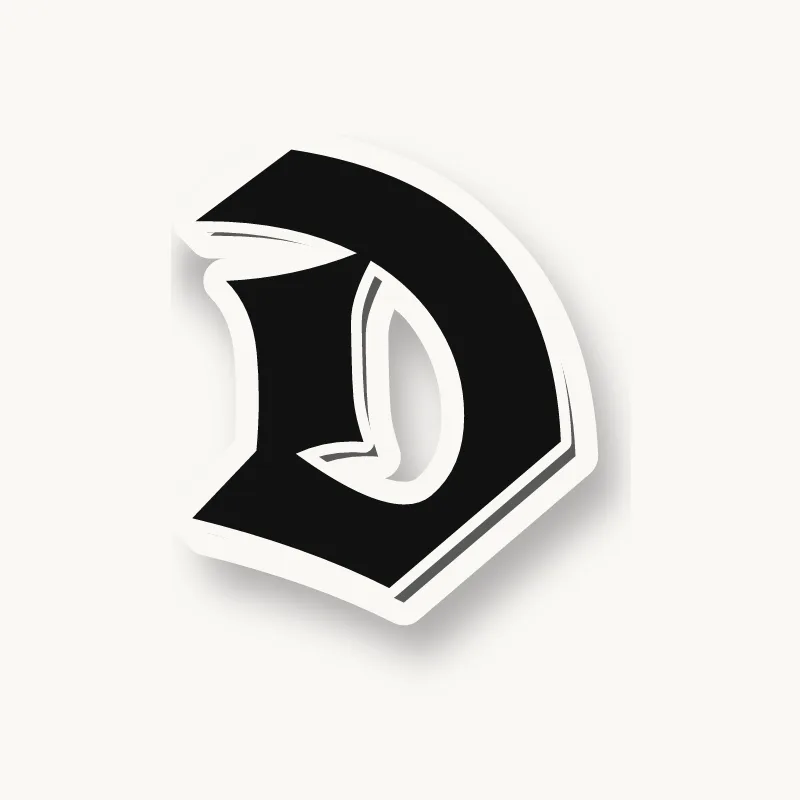

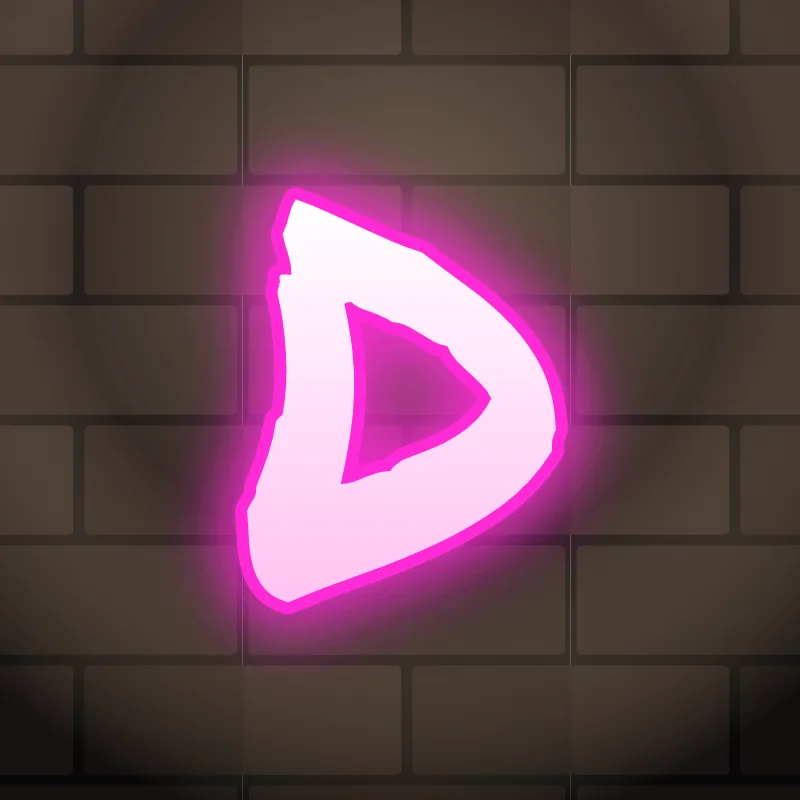
How do you draw a graffiti D?
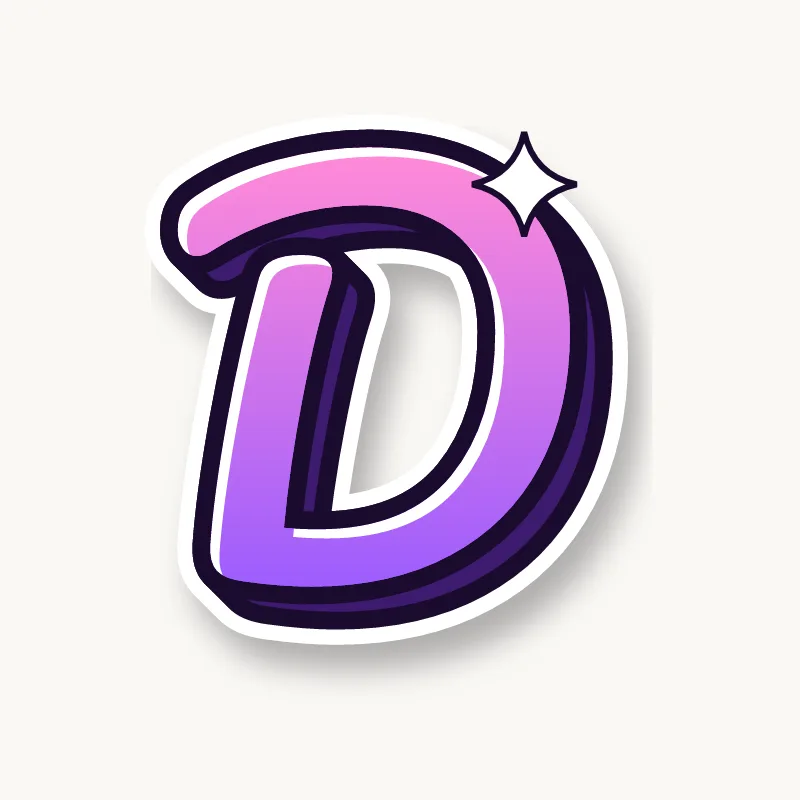
Draw a straight stem, attach one big curve from its top to its bottom, and push that curve out until the D is almost as wide as it is tall. Thicken both parts, keep a small hole near the stem, then outline it and add 3D. The stem stays straight; the curve does the styling.
- Stand the stem. One straight vertical line, the full height of your other letters.
- Swing the bowl. Draw a single curve from the top of the stem to the bottom, bulging well out to the right. It should feel slightly too wide.
- Fatten unevenly. Make the curve thicker than the stem where the bowl swells on the right.
- Set the counter. Leave a narrow, upright hole close to the stem. An off-center hole looks more solid than a centered one.
- Outline and extrude. Ink it, run the 3D block along the bottom and the outer curve, and add a highlight on the top-left corner of the stem.
Letter structure: the parts of a D
A D is a stem with one large bowl. Unlike the bowls of a B or a P, the D's bowl spans the full height, so most of the letter is curve and there is only one counter. The two corners where the bowl leaves the stem, top and bottom, are where a cap, an extension or a notch looks best.
The D in bubble, blockbuster, wildstyle, throw-up and Old English
Bubble. A fat half-moon on a short stem. Let the bowl spill past the top and bottom of the stem so it looks inflated.
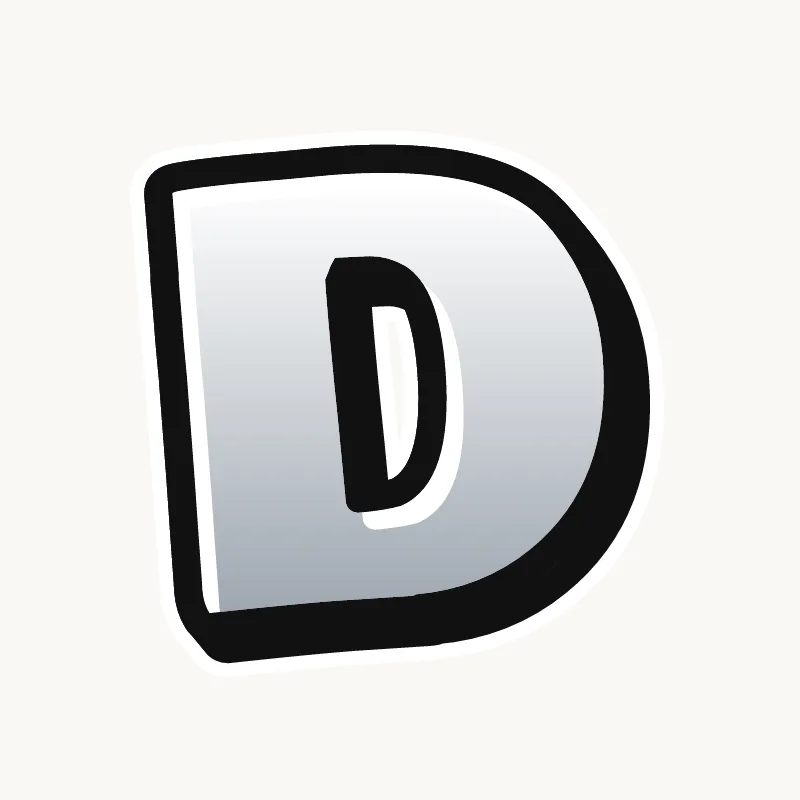
Blockbuster. A rectangle with the right corners clipped. Clipping only the top corner gives the D a forward lean.
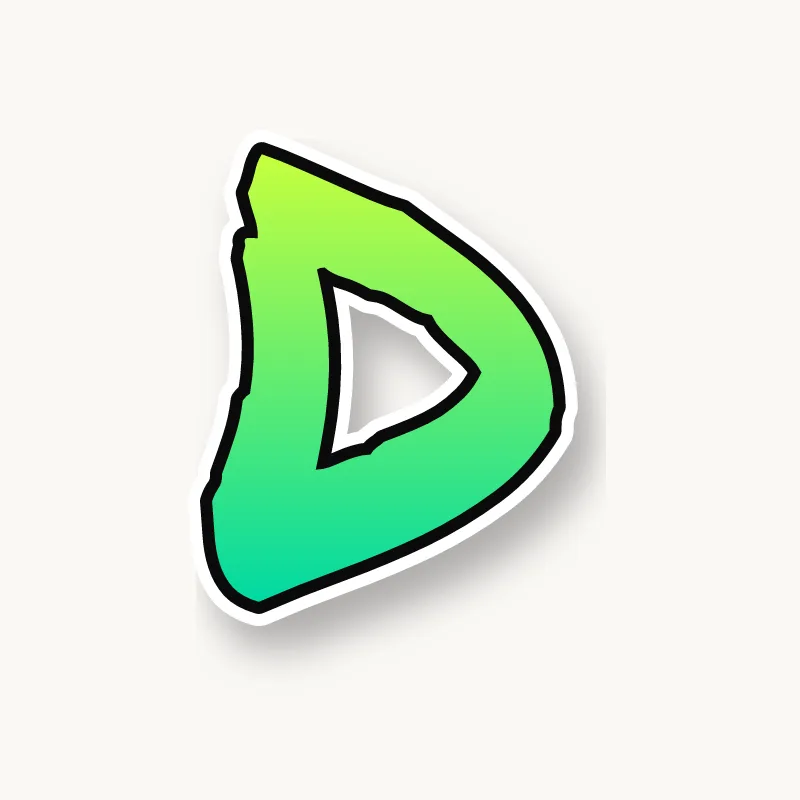
Wildstyle. The top-left corner sprouts an arrow pointing back, and the bowl can split where it meets the stem. Keep the counter visible.
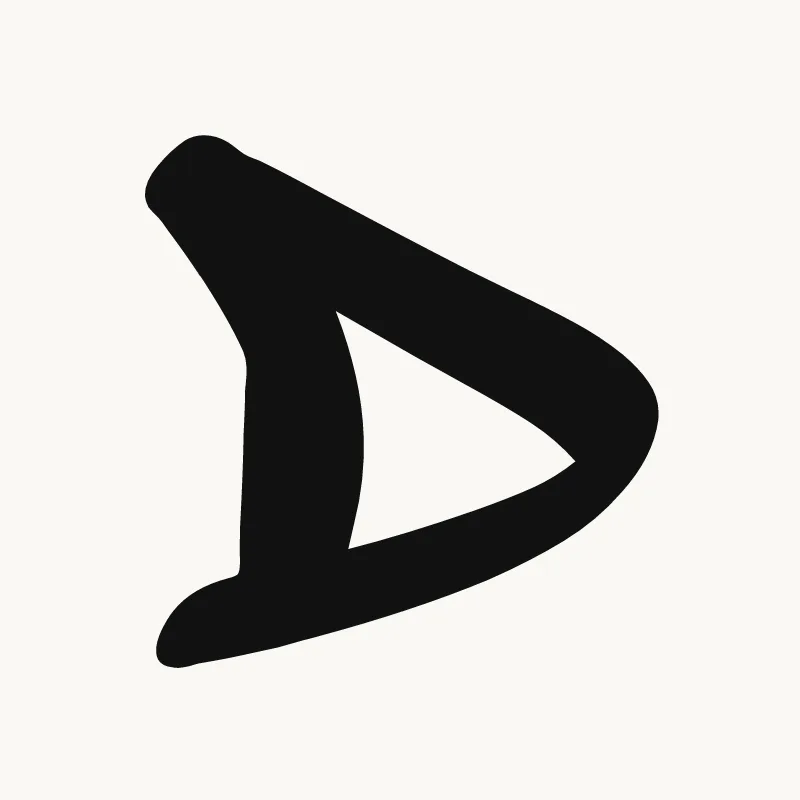
Throw-up. A single loop: up the stem, around and back down. Fill it flat and keep the hole small.
Old English. In many blackletter alphabets the D is a rounded, curling shape with a hairline flourish rather than a stem and bowl, so practice it on its own before using it in a word.
Common mistakes with a graffiti D
- A thin bowl with a tall, narrow hole. It looks weak next to fatter letters.
- Rounding the stem. If both sides curve, the D turns into an O. Keep the left side flat.
- Smoothing away the corners. A D drawn as a plain half-circle has nowhere to hang caps or arrows, so it looks bare next to its neighbors.
Uppercase or lowercase D?
A lowercase d puts the bowl on the left and a tall stem on the right. It is the mirror of b, so if you use both in one word, give them different caps so they do not read as a pair of twins.
Adding arrows to a D
Arrows on a D usually come off the top left corner, pointing back, or off the top of the stem on a lowercase d. See how whole words lock together in wildstyle.
Making a D flow in a word
Because the right side is all curve, the next letter can overlap it without hiding anything important. D often ends a word (Ed, Bold, Fred, Squad), so its big curve is a natural place for the piece to stop. Let the letter before it overlap the flat stem, as in "ND" or "LD", and keep the bowl free so the word finishes on a clean shape. At the start of a word (Dan, Dash), the bowl can push into the next letter while the stem anchors the left side.
Want to see it with your own name? Type it into the graffiti letter generator, or learn the whole process step by step in how to draw graffiti.