

Posca markers are water-based paint markers made by the Japanese company Mitsubishi Pencil, sold under its uni brand. They lay down a smooth, opaque layer of pigment paint that covers what is underneath, which is why artists use them for graffiti sketches, lettering, customizing shoes and painting on almost any surface.
This guide answers the questions people ask most: what they are, whether they are acrylic, permanent, waterproof or washable, how to use them on fabric, canvas and glass, how to remove them, and what to draw.
What are Posca markers?
A Posca is a paint marker: instead of thin ink, it holds a water-based pigment paint. Inside the barrel there is a small mixing ball and a valve. When you press the tip down, the valve opens and paint flows into the nib. The result is thick, flat color that looks more like paint than marker.
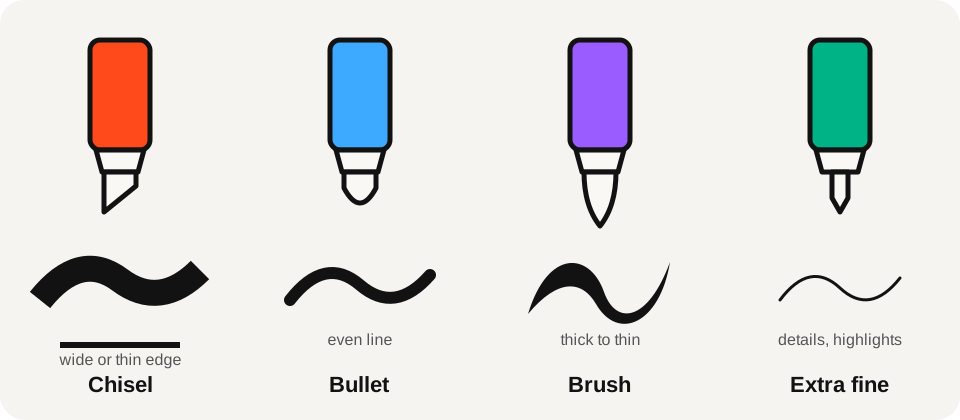
Three things make them popular:
- Opacity. Light colors cover dark ones, so you can put white highlights on top of a dark fill.
- Surfaces. They work on paper, card, wood, stone, fabric, metal, glass, plastic and ceramics.
- Low smell. Being water-based, they are much more pleasant indoors than solvent or oil-based markers.
The range includes standard colors plus pastel, metallic, fluorescent and glitter sets. If you are wondering how Posca compares with other paint markers in general, read what paint markers are.
Are Posca markers acrylic?
Not exactly, although they are often sold as acrylic markers. The maker describes Posca as a water-based paint marker filled with pigment paint. Once dry, the matte, opaque finish looks a lot like acrylic paint, which is where the confusion comes from, and some shops list them under “acrylic markers” anyway.
The difference shows on smooth surfaces. Markers sold as acrylic paint markers, such as Molotow ONE4ALL or Montana Acrylic, are made to grip glass, plastic and metal more firmly and tend to hold up better outdoors. On paper, card and wood you will barely notice a difference. See the graffiti markers guide for how the types compare.
Are Posca markers permanent?
Posca markers are permanent on porous surfaces and removable on slick ones. Paper, card, raw wood and primed canvas soak up a little of the paint, so it stays put once dry. Glass, metal and glossy plastic give the paint nothing to grip, so it can be wiped or scraped off.
| Surface | Result once dry |
|---|---|
| Paper, card, cardboard | Permanent |
| Raw wood, unglazed stone, primed canvas | Permanent |
| Fabric | Lasts much better if heat-set |
| Glass, mirrors, glossy plastic, metal | Can be wiped, scraped or washed off |
| Glazed ceramics | Can be scratched or washed off |
To make a design last on a smooth surface, let it dry fully, then seal it with a clear varnish made for that surface. Water-based spray varnish is a common choice because it will not dissolve the paint the way some solvent sprays can. Test the varnish on a small sample first. For anything outdoors, sealing is a good idea on every surface, and a UV-resistant varnish helps colors fade more slowly in sunlight.
Are Posca markers waterproof?
Dry Posca paint is water-resistant on porous surfaces but not fully waterproof everywhere. On paper, wood and canvas, a splash or damp hand will not make it run. On glass, plastic and metal, water plus rubbing will lift it, which is the whole point of Posca window art.
If a Posca design has to survive rain, washing or regular handling (painted rocks in a garden, a bike frame, a phone case), seal it. Two thin coats of varnish do better than one thick one.
Are Posca markers washable?
Posca markers are not “washable markers” in the kids’ marker sense. While the paint is wet, it comes off skin, glass and other smooth surfaces with soap and water. Once dry on fabric, paper or wood, it behaves like paint and stains.
So treat them like paint:
- Cover the table and wear clothes you do not mind marking.
- Wipe up spills right away, before they dry.
- On a shirt you are customizing, heat-setting is what helps the design survive the washing machine (see the fabric section below).
How do you use Posca markers?
- Shake it. With the cap on, shake until you hear the ball rattle, then a few seconds more. Paint settles when the marker sits.
- Prime the tip. Press the tip down on scrap paper several times until paint flows into it. Do not over-pump, or paint will flood out.
- Draw with light pressure. Let the paint flow; you do not need to press hard. Pressing too hard pushes the tip back into the barrel and can flood it.
- Layer when dry. Wait for one layer to dry before adding another color on top. This keeps colors clean and stops the tip picking up the color underneath.
- Cap it straight away. The tip dries quickly if left open.
If a marker stops flowing, repeat steps 1 and 2. If the tip gets dirty from drawing over wet paint, wipe it on scrap paper until the color is clean again. Many Posca tips can be pulled out with tweezers and rinsed, or flipped around if the tip is reversible.
Which tip size should you buy?
Posca markers come in tip sizes from extra-fine to very broad chisel tips. The model number tells you the tip: lower numbers are finer, higher numbers are wider, and “K” models have a chisel tip. A simple way to choose:
- Extra-fine and fine tips for outlines, highlights and small details.
- Medium tips (the PC-5M size) for filling letters on paper. This is the size most people use most.
- Broad and chisel tips for big areas, posters and canvases.
For graffiti on paper, a black fine tip for outlines, a white fine tip for highlights and a few medium colors for fills is a great starter set.

Can you use Posca markers on fabric?
Yes, Posca markers work on fabric, especially smooth, tightly woven cotton, cotton blends and canvas sneakers. Rough, stretchy or fluffy fabrics are harder: the tip snags and the paint can crack when the fabric stretches. They are not sold as dedicated fabric markers, but they do the job well when you prepare the fabric and heat-set the result.
For the best results:
- Wash and dry new fabric first to remove any finish that stops paint soaking in.
- Put card inside the item so color does not bleed through to the other side.
- Use light layers and let each one dry. Thick blobs crack.
- Let it dry fully, then heat-set the design with an iron on the reverse side, following the time and temperature on your pack.
- Wash inside out on a gentle cycle, and skip harsh tumble-drying.
Test on a scrap or a hidden spot first. Some people add a fabric medium or a textile varnish on top for extra durability on shoes and bags.
Do Posca markers work on canvas?
Yes. Posca markers work well on primed canvas and canvas boards, where they act like a very precise paintbrush. Most canvas sold in art stores comes primed with gesso; if yours is raw, give it a coat of gesso first so the paint does not soak in unevenly.

Use broad tips for backgrounds and fills, and fine tips for outlines and detail. Posca also layers well over acrylic paint once the paint is dry, so many artists block in large areas with a brush and finish the details with markers. Seal the finished canvas with a varnish if it will hang in a bright room.
Can you use Posca markers on glass?
Yes, Posca markers cover glass, mirrors and windows well, and the paint wipes off later with water and a cloth or a glass scraper. That makes them a favorite for shop windows, holiday window art and party decorations.
For window art, draw on the inside of the glass so rain does not wash it away, and use light colors with a dark outline so the design reads from outside. If you want a glass design to last, let it dry for a day and seal it with a clear varnish made for glass. Keep Posca away from the rims of glasses, mugs and plates, and from anywhere food or drink touches; treat painted glassware and ceramics as decoration.
Are Posca markers safe for skin?
No, Posca markers are not made for skin. They are sold as non-toxic art markers, which is about safe use as an art material, not the same as being made for body art, face paint or temporary tattoos.
If you get paint on your hands while drawing, it washes off with soap and warm water. Just do not use Posca to draw on skin on purpose. For skin designs, use face paint or body markers sold for that use.
How do you remove Posca markers?
How you remove Posca depends on the surface and whether the paint is still wet:
- Skin: soap and warm water. Dry paint takes a little scrubbing.
- Glass and mirrors: water and a cloth, or a glass scraper or razor scraper for dry paint.
- Whiteboards, plastic and metal: water first, then rubbing alcohol on a cloth for stubborn spots. Test on a hidden area, since alcohol can dull some plastics.
- Clothes: act while the paint is wet. Rinse with cold water from the back of the fabric and work in soap. Once dry, and especially once heat-set, it may be permanent.
- Paper and wood: you cannot really remove it. Paint over it with an opaque color, or sand wood back.
What to draw with Posca markers
Posca suits anything that needs bold, opaque color. A few ideas, from easy to more ambitious:

- Graffiti letters in a sketchbook, with white highlights on top. Design the word first in the graffiti generator, or pick a style from the graffiti alphabet.
- Bubble letters on dark paper, where the opaque paint really shows. Start with the bubble letter guide.
- Customized shoes, jackets and tote bags.
- Painted rocks and small wood signs. Seal them if they live outside.
- Phone cases, notebooks and skateboard decks.
- Window art for holidays, since it wipes off glass.
- Bullet journal headers and posters, using metallic and fluorescent colors.
Stuck for a word to letter? The graffiti ideas page has dozens to copy.
Where can you buy Posca markers?
Posca markers are sold in art supply stores, many craft and stationery chains, and large online marketplaces, both individually and in sets. Some graffiti shops stock them too, next to spray paint. Buying the brand’s official sets or from well-known art retailers is the safest route, because popular markers get counterfeited. Be wary of listings with prices that look far too low, blurry packaging photos, or no clear seller name.
Ready to buy? Our Posca and paint marker picks are at the end of this guide.
How much do Posca markers cost?
Posca markers are a mid-priced paint marker: more than a basic felt-tip, less than most refillable acrylic markers. Prices change often and vary by store and country, so check a few retailers. Two things affect the price:
- Tip size. Wider tips hold more paint and cost more per marker.
- Sets vs singles. Sets usually work out cheaper per marker, while singles let you replace only the colors you use most (usually black and white).
The bottom line
Posca markers are some of the easiest paint markers to start with: opaque, low-smell and happy on almost any surface. They are not true acrylic markers and not permanent on everything, so match the surface to the job, heat-set fabric, and seal anything that needs to last. For a wider comparison with alcohol markers and mops, see the best graffiti markers.