
To draw a graffiti character, build it from simple shapes: a big circle for the head, a small bean for the body, and tubes for arms and legs. Give it a strong expression, oversized hands and sneakers, then outline everything in thick black lines and color it to match your letters. Graffiti characters are cartoons, so exaggeration matters more than realism.
Practice on paper, in a sketchbook or on legal walls. Painting on property without permission is illegal in most places.
What are graffiti characters?
Graffiti characters are cartoon figures that writers draw beside, on top of, or inside their letters. They can be people, animals, monsters, robots, or everyday objects with faces, like a spray can with eyes. A character adds a mood to a piece and gives viewers something to look at besides the lettering.
Some characters are one-offs, drawn for a single piece. Others become a writer’s mascot: the same figure, drawn hundreds of times, until people recognize it as quickly as the name. On a wall, a character might hold a spray can, point at the letters, lean on the first letter, or peek out from behind the last one.
Where graffiti characters came from
Characters have sat next to graffiti letters since the subway era in New York in the 1970s. Writers borrowed from comic books, cartoons and underground comix. The best-known influence is Vaughn Bodē, an American underground cartoonist whose characters, such as Cheech Wizard, were copied and reworked by many New York subway writers.
Through the 1980s, the b-boy became a classic graffiti character: a hip-hop kid in a cap, hoodie and big sneakers, often holding a spray can or a boombox. That figure still shows up in pieces today, next to newer styles of cartoon animals, monsters and abstract creatures.
What you need
The tools are the same as for drawing graffiti letters:
- A pencil (HB or 2B) and a kneaded eraser
- Paper or a sketchbook (a blackbook)
- A black marker with a medium tip for outlines and a fine one for faces
- Two or three colored markers and a white gel pen for highlights
If you want to know which markers handle color fills best, the graffiti markers guide compares them. Our picks for paper, pencils and markers are at the end of this guide.
How do you draw a graffiti character step by step?
Draw a graffiti character in five steps: block in the head and body with simple shapes, add an action line and limbs, build the details, draw the face, then outline and color. Keep the pencil light until step five so you can change things freely.
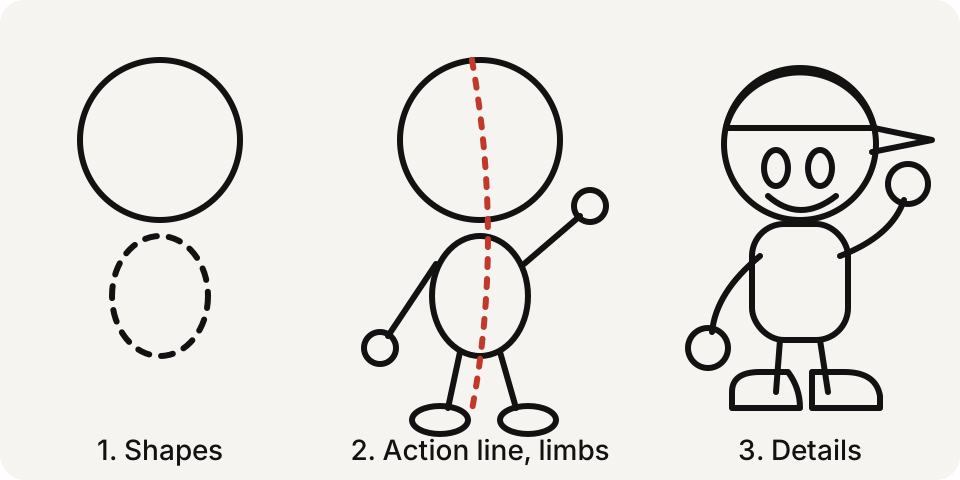
Step 1: Block in the head and body
Draw a big circle for the head and a smaller oval or bean shape for the body. In graffiti and cartoon styles the head is often as big as the whole body, or bigger. That oversized head is what makes a character look cartoonish and friendly instead of stiff.
Step 2: Add an action line and limbs
Before the arms and legs, draw one curved line from the top of the head down through the body. This action line sets the pose: a C-curve looks relaxed, a strong S-curve looks energetic. Then add the arms and legs as single lines, with small circles for hands and ovals for feet. Fix the pose now, while it is only a few lines.
Step 3: Build the details
Turn the stick limbs into tubes, and keep them short and chunky. Add clothes as simple shapes on top of the body: a rounded box for a hoodie, a half-circle and a brim for a cap. Draw the hands and feet big, at least twice as big as they would be on a real person. Big hands and big sneakers are a graffiti character trademark.
Step 4: Draw the face
The face carries the character, so spend the most time here. Place the eyes low on the head, about halfway down, which leaves a big forehead and makes the character look cartoonish. Then pick one clear expression and push it further than feels natural.
Step 5: Outline and color
Go over your final lines with a black marker. Use a thicker line for the outer edge of the character and a thinner one for details inside, like fingers and clothing folds. Erase the pencil, then color with the same palette as your letters, and add white highlights on the same side as the light in your piece.
How do you draw graffiti character faces and expressions?
Graffiti faces work best when the expression is simple and exaggerated. Big eyes, a wide mouth and strong eyebrows read from across a room. Most expressions come from just three parts: the shape of the eyes, the angle of the eyebrows and the curve of the mouth.
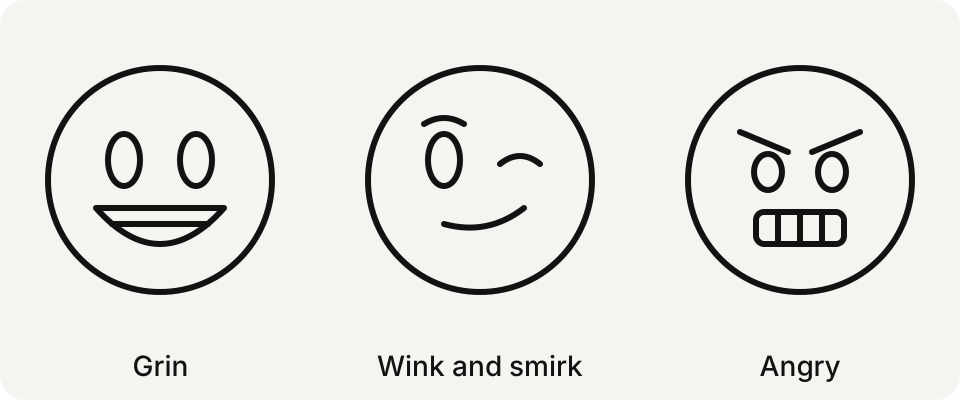
A few faces to practice first:
- The grin. Tall oval eyes and a wide, open mouth shaped like a half-moon. Add a line of teeth across the top.
- The wink. One open eye, one closed eye drawn as a curved line, and a lopsided smirk. This is the classic cool, confident graffiti face.
- Angry or tough. Eyebrows slanting down toward the nose, small eyes, and a flat mouth with clenched teeth.
- Surprised. Round eyes with small pupils, raised brows and a small “O” mouth.
- Laughing. Eyes closed as upside-down U shapes and a huge open mouth.
Fill a whole page with the same head shape and change only the face. It is the fastest way to build a library of expressions you can reuse.
How do you draw hands for a graffiti character?
Draw cartoon hands as a rounded palm with three thick fingers and a thumb. Keep the fingers sausage-shaped and roughly the same length, and add a cuff or glove line at the wrist. Hands that are big and simple look more like graffiti than small, realistic ones.
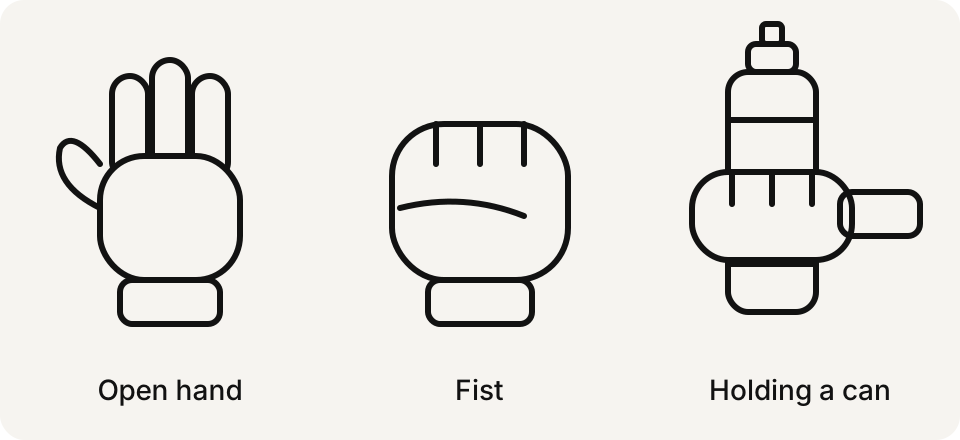
The poses you will draw most often are an open hand waving, a fist, a pointing finger aimed at the letters, a thumbs up, and a hand gripping a spray can. To draw a hand holding a can, draw the can first as a tall rounded rectangle with a cap and nozzle, then wrap a fist around it with the fingers on the front side.
How do you draw sneakers on a graffiti character?
Draw graffiti sneakers big and chunky, built from three shapes: a rounded blob for the shoe, a thick band for the sole, and a curved toe cap. Then add a few laces and one stripe. Oversized sneakers balance a big head and make a character look grounded.
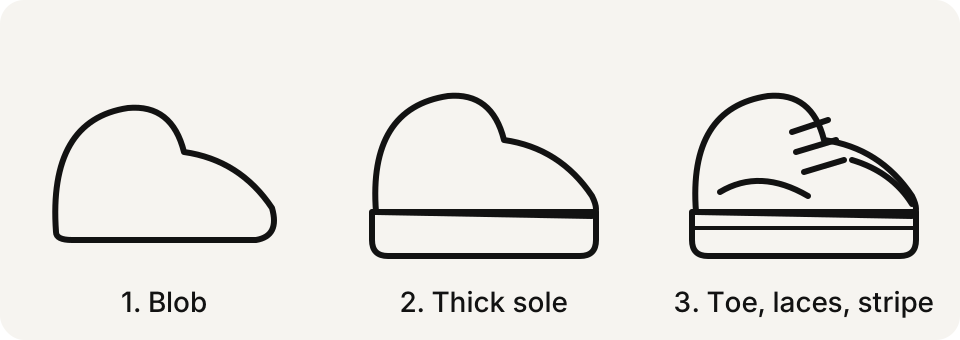
Keep the stripe or logo generic, a simple curve or a few bars, rather than copying a real brand. Draw both shoes pointing slightly outward so the character looks stable, or one lifted off the ground if it is walking or jumping.
Easy graffiti character ideas for beginners
The easiest graffiti characters are made from one main shape with a face, so you can focus on expression and outline instead of anatomy. Start with one of these and draw it ten times before moving on:
- A spray can with a face. A tall rectangle, a cap, two eyes and a grin. Add stubby arms and sneakers and it becomes a mascot.
- A blob monster. Any lumpy round shape with one big eye, a toothy mouth and a few drips running off it.
- A b-boy or b-girl. Big head, cap, hoodie, big sneakers. The classic graffiti figure.
- A cat, dog or bird. Use the same big-head, small-body rule. A circle head with triangle ears is already a cat.
- A robot. Boxes for the head and body, tubes for limbs, two round eyes and an antenna.
- A skull. A rounded head shape, two big eye holes, a small nose and a row of square teeth.
- An alien. An upside-down egg for the head, huge eyes and a tiny body.
- A letter with a face. Give the first letter of your name eyes, arms and sneakers. It ties the character to the lettering directly.
Characters are a good match for bubble letters, because both use round, soft shapes and thick outlines. If you want lettering to pair with your character, type a word into the graffiti generator and draw the character beside it.
How do you place a character next to a graffiti piece?
Place the character at one end of the piece, usually the left so it is seen first, and let it interact with the letters: leaning on them, pointing at them, holding a can, or overlapping the first letter. Make it about as tall as the letters, or a little taller, so neither one fights for attention.
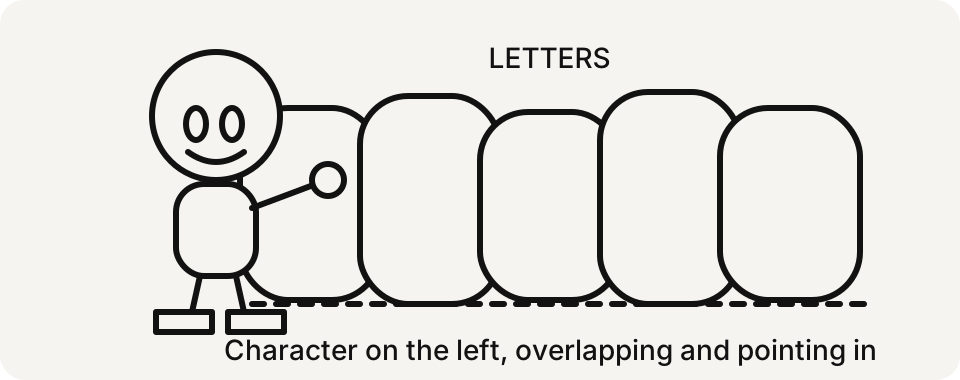
A few rules keep a character and its piece looking like one drawing:
- Overlap, do not float. A character that touches or overlaps a letter looks part of the piece. One standing alone in empty space looks added later.
- Face inward. Turn the character’s body, eyes or pointing hand toward the letters, so it leads the viewer into the word.
- Share the light. Put highlights and 3D on the same side as the letters’ highlights and 3D.
- Share the colors. Reuse at least one fill color from the letters on the character’s clothes or skin.
- Match the outline. Use the same outline thickness on the character as on the letters.
If you have not drawn the lettering part yet, how to draw graffiti walks through the letters from sketch to 3D and highlights.
Tips for practicing graffiti characters
Draw characters often and small. A page of ten quick heads teaches more than one slow, careful figure. These habits help:
- Keep a character page in your blackbook. Add one new face, pose or hand to it every day.
- Draw the same character from different angles. Front, side and three-quarter view. It is how a one-off doodle turns into your own recurring mascot.
- Exaggerate one thing at a time. Bigger head, bigger shoes, longer arms. See which change gives your character the most personality.
- Study cartoons, then make your own. Copy a cartoon you like to learn how it is built, then redesign it with your own shapes and colors.
- Use reference for poses. Take a photo of yourself or a friend in the pose, then simplify it into circles and tubes.
- Keep the outline clean. A wobbly outline ruins a good drawing. Go over final lines slowly, and turn the paper so you pull the line toward you.
When the character and the letters both feel comfortable, try drawing them together on one page from the start. Plan the space for both in the pencil sketch, so the character is part of the piece instead of squeezed in at the end.